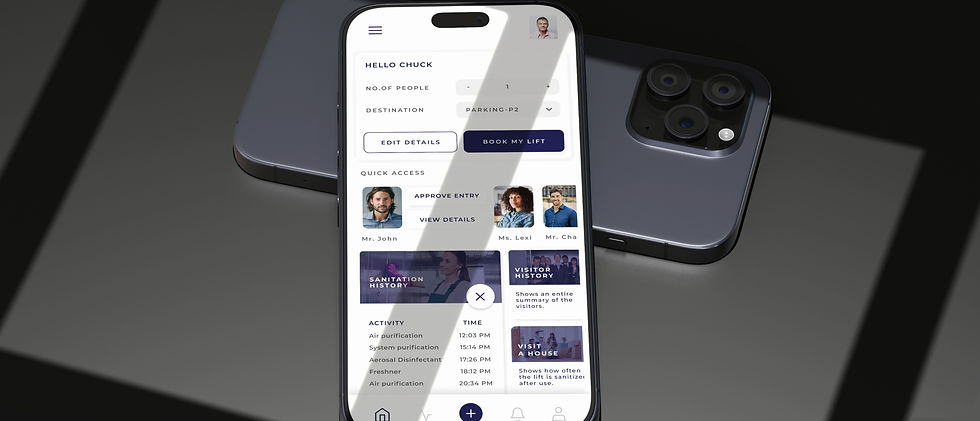
What is Auvova ?
Auvova is a contactless system designed during the COVID-19 pandemic to make elevator use in high-rise buildings safer and less stressful. It includes new usage protocols and features to reduce contact and crowding.
TEAM:
Managed end-to-end process, from user research to user testing.
ROLE:
Research
Visual Design
Wireframing
Prototyping
Usability Testing
DURATION:
3-month case study
TOOLS:
Figma, Miro, Adobe Creative Suite
Context
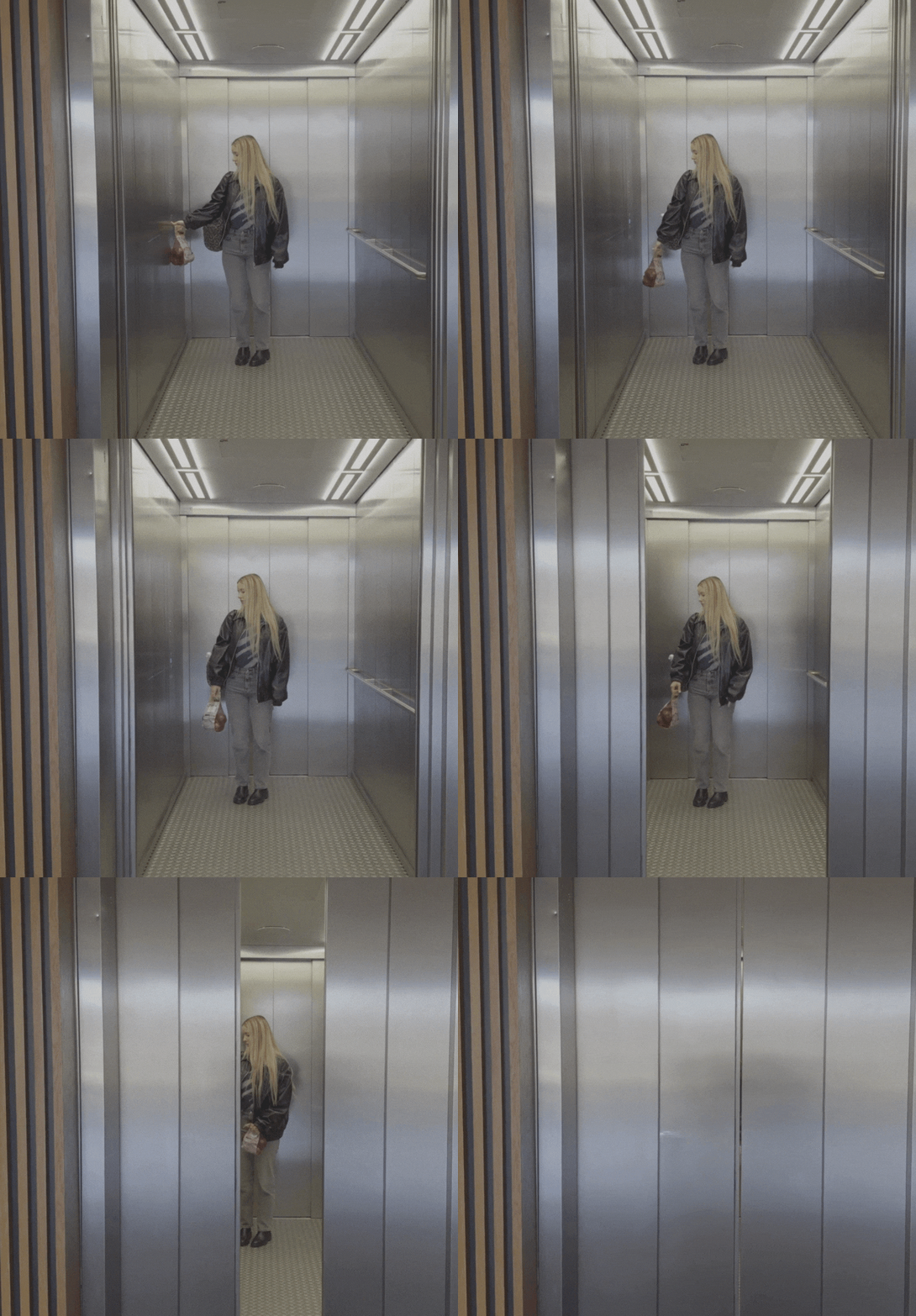
During the height of the COVID-19 pandemic, people everywhere faced unique challenges, but for residents in high-rise buildings, the simple act of using an elevator became a daily risk. Enclosed, shared, and often overcrowded, these vertical lifelines turned into potential hotspots for virus transmission. The need to introduce a change within the system became obvious.
Project Aims
OBJECTIVE 1
To reduce the risk of virus transmission by introducing touchless interfaces.
OBJECTIVE 2
To manage and limit the number of people using the elevator at once.
OBJECTIVE 3
To create a sense of security and comfort by implementing clear protocols.
Research Insights
FROM NEWS AND DATA
-
Cluster Risk – Elevator ride in crowded buildings can lead to widespread infection.
-
Airflow Impact - Shared atmostphere can significantly increase airborne virus exposure.
-
Transmission Driver - Elevators are a key source of spread in multi-unit residences.
News-based research
Some extracts from articles and media
3500
bacteria per square inch on lift button. Lift button has 17 times more bacteria than a toilet seat.
≥ 71
people infected indirectly in elevator use in heilongjiang superspreader cluster
10%
infection rate in specific vertical cluster vs 0.66% elsewhere
FROM USER INTERVIEWS
-
Hygiene matters – Users expect frequent cleaning and minimal touchpoints.
-
Control is key – They prefer touchless, app-based interactions.
-
Crowding causes stress – Enclosed spaces without distancing increase discomfort.
User Research
Pain points from five user interviews

4/5 users wanted limited lift contact.
Sanitization was a key expectation for 80%
60% favored notifying rule-breakers.

FROM DESIGN TRENDS:
-
Touchless tech went global – Widely adopted in Asia and Europe.
-
Innovation surged – IoT and mobile controls became standard.
-
Accessibility matters - Preferences for elderly and risk-prone users.
Solutions
Global best practices implemented
Touchless Controls

Occupancy Limits & Crowd Control

Frequent Sanitization Protocols
Contactless Entry & Destination Dispatch


Requirements

To reduce the risk of virus transmission, there was a clear need to create a contactless environment by introducing touchless interfaces and minimizing physical interaction.
PAIN POINTS TO REQUIREMENTS
Design Problem
To design a contact-less system within high raised buildings which assures
the users a safe, secure, reliable, stress-free environment to move about their
day-to-day activities seamlessly during the pandemic times.
Elevator Redesign
To design a contact-less system within high raised buildings which assures the users a safe, secure, reliable, stress-free environment to move about their day-to-day activities seamlessly during the pandemic times.
IDEATION
To reduce the risk of virus transmission, there was a clear need to create a contactless environment by introducing touchless interfaces and minimizing physical interaction.


STORYBOARDING
Storyboarding was used to map the end-to-end user journey and identify how each app feature integrates with the lift system, ensuring a seamless and intuitive interaction across both digital and physical touchpoints.


Final Concept
An elevator system that integrates app-based controls with built-in safety protocols. The system reduces user anxiety by using camera detection to ensure protocols are followed, creating a safer, stress-free experience. Through the app, users can book elevators for specific purposes or groups,such as the elderly, disabled, or visitors,enhancing personalization and access.
LIFT SYSTEM
Strict safety measures were enforced, including post-ride disinfection, limited occupancy, protocol-triggered door holds, and mandatory masks.

Aerosol disinfection after every trip.
Restricted elevator occupancy.
Door hold triggered if safety protocols are breached.
Masks were essential and compulsory for elevator use.
App-based lift booking with real-time status and smart alerts, designed for safety, transparency, and flexible use across scenarios like shopping or emergencies, and made accessible for families, the elderly, and people with disabilities.
MOBILE APP

Pre-book lifts and control them via the app
A transparent system ensures user safety
Adapts to user needs: shopping, emergencies, shifting
Voice updates and smart notifications
Real-time lift status: arrival time & occupancy
Interface Design
I worked on designing an elevator app that felt simple, safe, and inclusive. The interface let users choose the type of trip they needed, whether for family, visitors, or accessibility, while quietly ensuring safety protocols were followed in the background.
INFORMATION ARCHITECTURE
While designing the information architecture, the focus was to keep primary tasks just a few taps away and easily accessible, while less-used features were placed in hidden menus to maintain a clean, uncluttered experience.

Wireframes prioritized usability, intuitive layouts, and key actions like lift booking and visitor access control. Real-world context and feedback shaped a smooth, user-centered experience.
WIREFRAMING
.png)

Interface Execution
The four biggest psychological challenges faced were frequent sanitation, overinteraction with co-passengers, concerns about fellow passengers' health, and lack of enforcement for safety protocol.


User Feedback
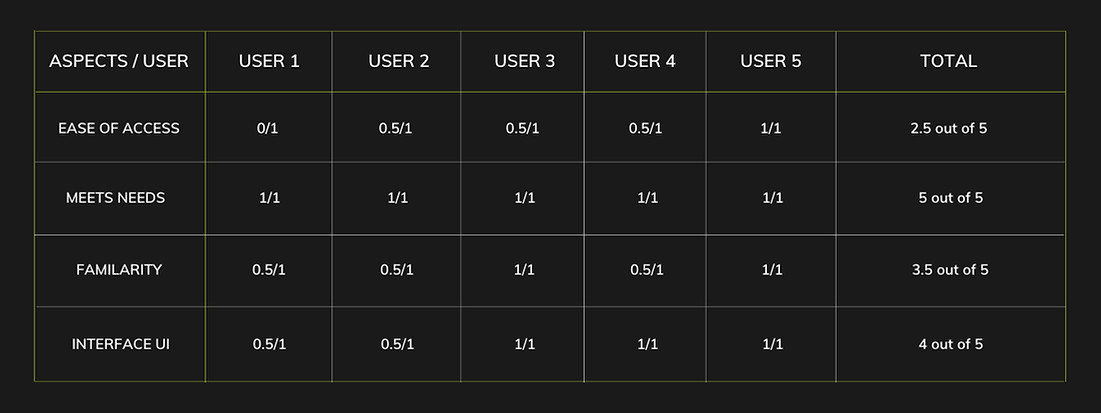
Users want easier access to key features like guest entry and personalized lift bookings. Language barriers due to English-only support limit accessibility. Many felt the app lacked functionality and suggested universal lift connectivity for a smoother experience.
5 testing sessions were held of guest and tenant interface in a simulated environment.